

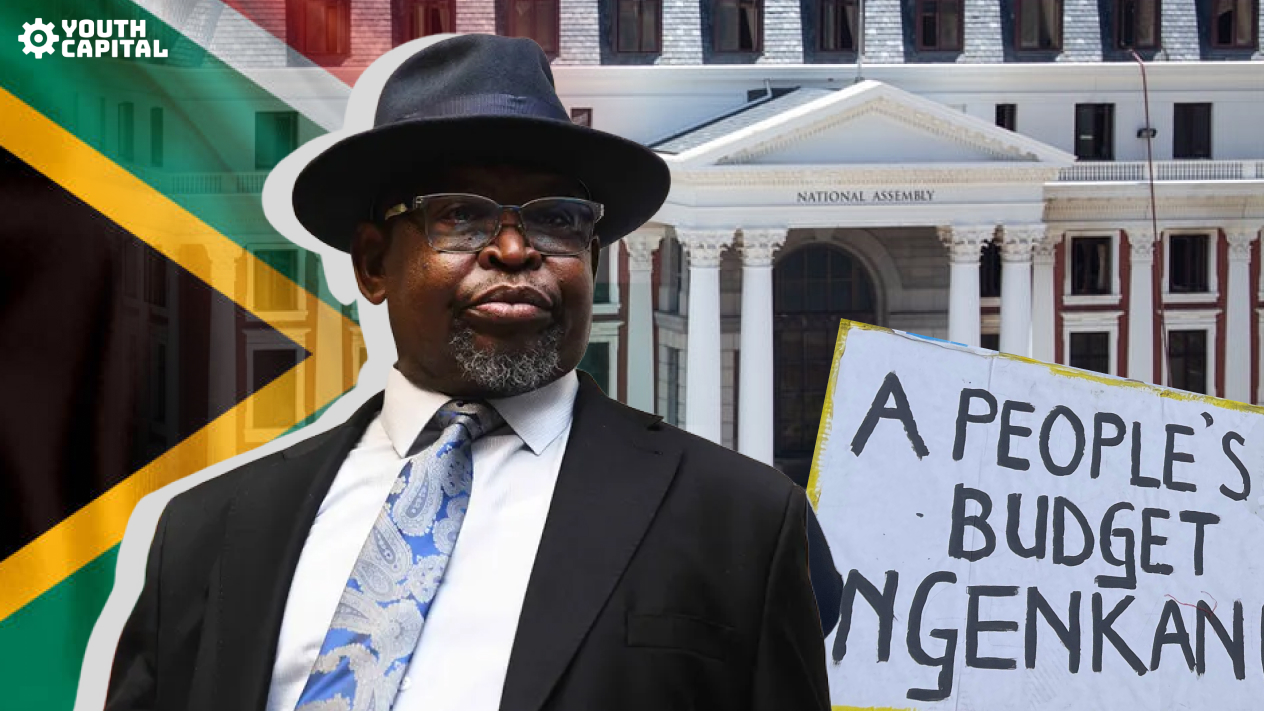
MTBPS 2025: Fiscal stability over what really matters to young people
Following the 2025 Midterm Policy Statement and the incessant focus on fiscal stability over a social investment to meet the needs of young people, advocacy campaign Youth Capital is calling for National Treasury to run a Youth Impact Assessment.
Statistics SA’s latest Quarterly Labour Force Survey indicates that young, black people remain the most vulnerable in the labour market, with young people between the ages of 15-24 years reporting an unemployment rate is sitting of 58,5%, followed by those aged 25-34 years with an unemployment rate at 38,4%. ‘In this context, National Treasury continued to tighten fiscal policy towards debt reduction. There is no commitment to prioritise change for young people entering the labour market’ says Buhlebethu Magwaza, Project Lead at advocacy campaign to tackle youth unemployment Youth Capital.
With the country’s economic growth being stagnant and a projected rate of 1.8% in the next three years, the National Treasury has focused on inflation targeting 3%. When a country sets a low inflation target, the main way to control it is by adjusting the interest rate, raising it when the inflation rises above target. However, higher interest rates make borrowing and debt more expensive, which slows down spending thus hurting small businesses. These businesses are often the first to pause hiring when credit becomes costly. ‘This is critical for two reasons: on the one hand, young people are continuously being asked to create their own jobs; but this is happening in an extremely constrained labour market, where aggregate consumption and demand is low. On the other hand, we know that small businesses are more likely to offer entry-level jobs to young people without work experience; impacting their financial performance will impact young people’s work opportunities too.’ Government spending is also likely to further tighten, increasing austerity measures. This will threaten essential services that already have vacant positions such as teachers, nurses, and doctors.
The MTBPS confirms that infrastructure is the main growth lever; however, it’s unclear how the infrastructure projects alone will promote the inclusion of young people – given the crisis our country is facing. Youth Capital urges National Treasury to include binding youth targets to ensure that young people benefit from the identified growth lever. Moreover, South Africa is the most unequal country in the world, and one multiplier alone will not suffice to meet the size of the crisis.
It’s important to note that research by Harambee Youth Employment Accelerator shows that job creation for young people is not a byproduct of growth; on the contrary, it requires an intentional approach; this is why Youth Capital is raising concerns around the lack of pipelines for young people to benefit from the existing infrastructure-led plans.
The tragedy is not economical, as unemployment drives mental health and psychosocial challenges. ‘This is why Youth Capital demands National Treasury to publish a Youth Employment Impact Statement to assess the ongoing impact of austerity of young people’s development and employment trajectory in our constrained economy,’ says Magwaza.